Social Media Is Addictive: Why the Verdicts Against Meta and Google Could Be Big Tech’s Big Tobacco Moment
Multi-million-dollar rulings against Meta. Headlines across the globe. And suddenly, an uncomfortable question is back on the table: What if social media isn’t just annoying — but systematically addictive? Why the tech industry may be entering its “Big Tobacco moment” — and why this could be the best time yet to walk away from the feed.
When Familiar Systems Lose Their Innocence
There are historical turning points that don’t announce themselves with fireworks. They don’t feel like revolutions. They feel like something quietly shifting beneath the surface. A crack appears in what once seemed normal. A narrative we’ve lived with for years begins to wobble. And then, suddenly, a single sentence, a verdict, a headline is enough to change how we see the world. That is exactly what may be happening right now with social media.
For the first time, courts in the United States have stated with remarkable clarity what many people have long sensed — and what, deep down, most of us already know: social media platforms are designed with mechanisms that can create dependency, engineered to keep users engaged for as long as possible.
Major news outlets across continents are now reporting on something that was once dismissed as cultural pessimism or moral panic. In recent days, several rulings have sent a strong signal. A jury in New Mexico ordered Meta to pay hundreds of millions of dollars in damages over failures to protect minors from online sexual exploitation. Additional legal decisions followed, reinforcing a growing perception: this is no longer a fringe issue. It is moving to the centre of public debate.
Whether in business magazines calling the rulings “landmark decisions” or in political commentary framing them as a potential societal wake-up call, the tone has changed. The idea that social media can be addictive is not new. What is new is that courts are beginning to validate this claim in legal terms.
One American columnist in The Times captured the moment in a phrase that already sounds historic:
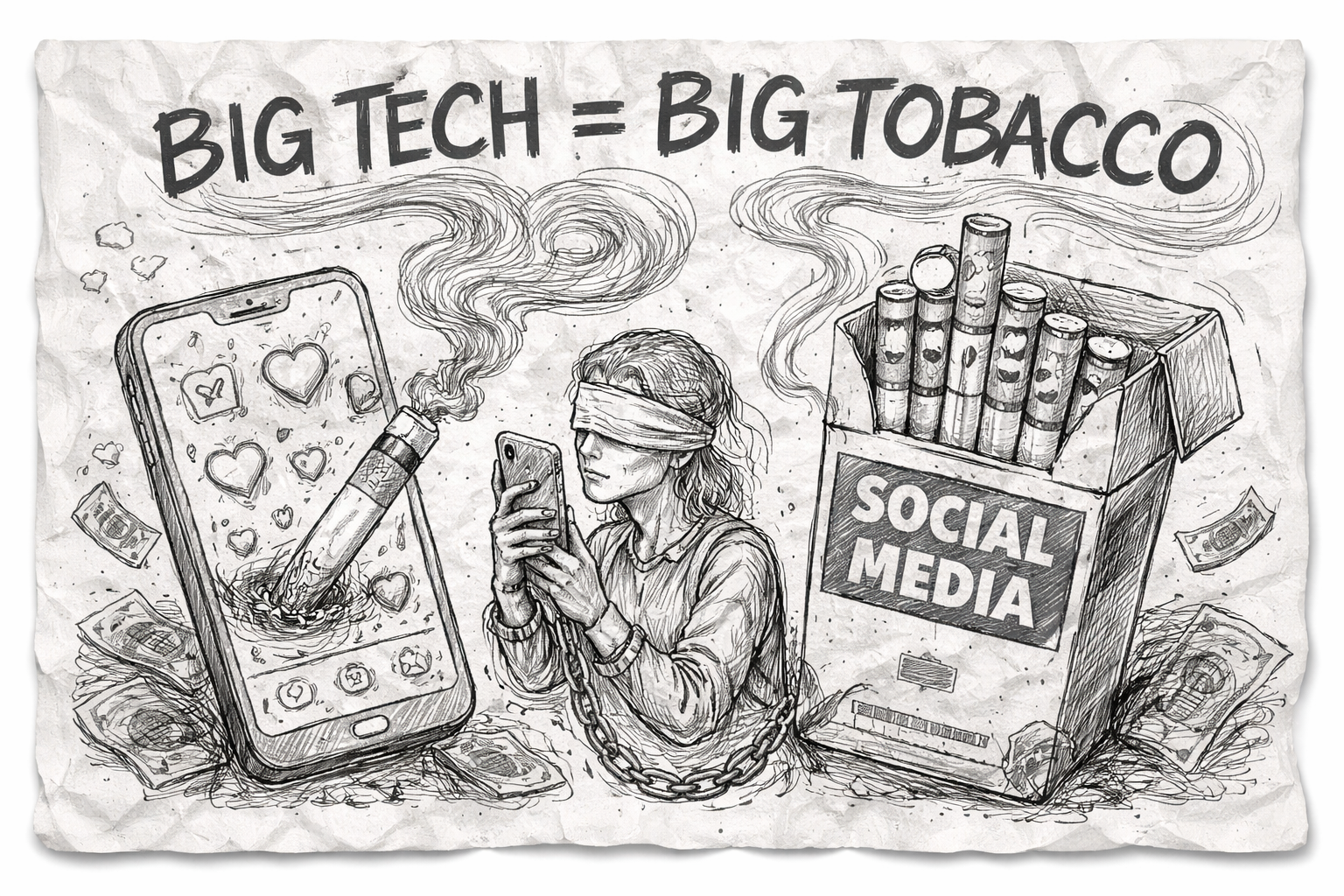
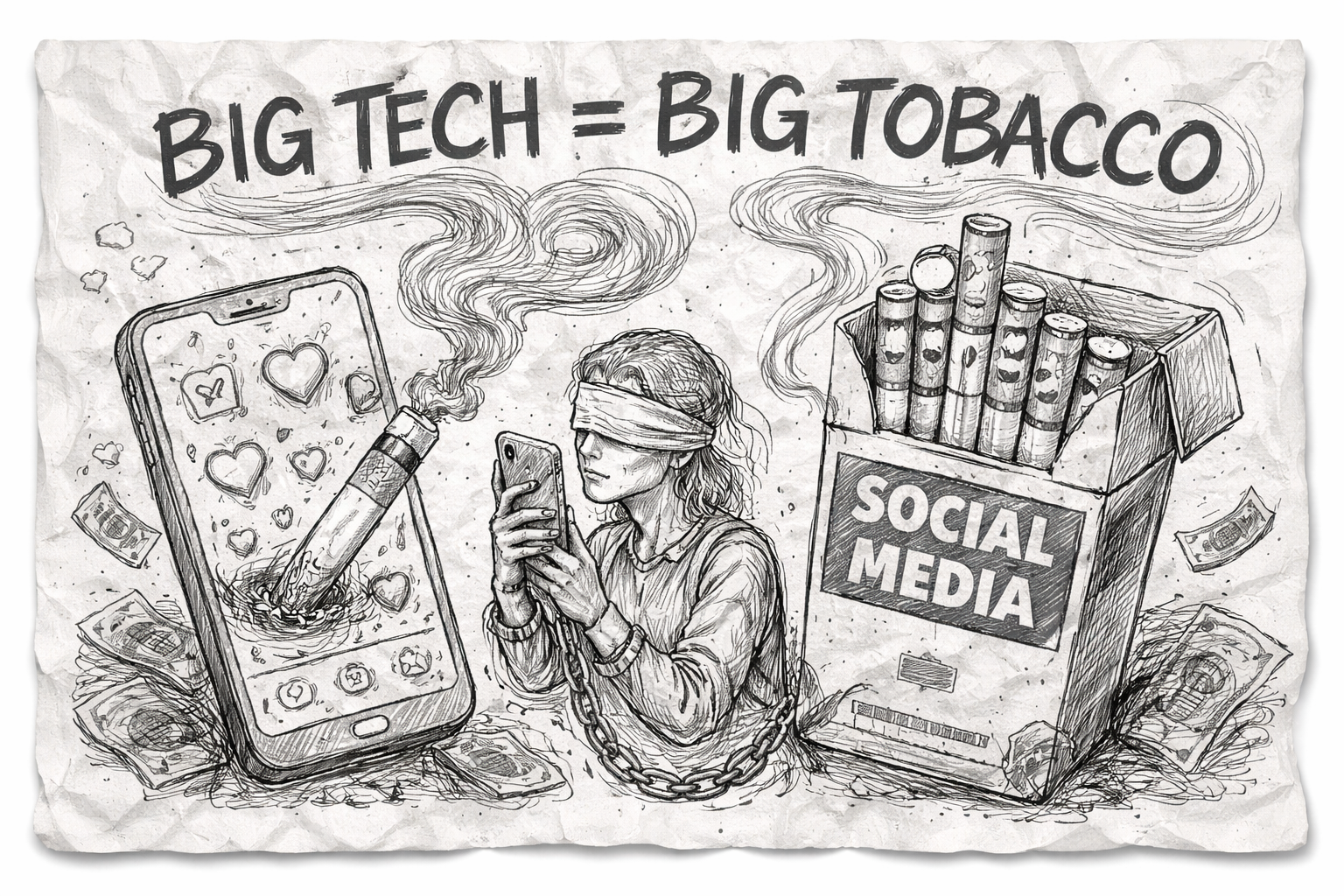
this could be Big Tech’s “Big Tobacco moment.” The comparison may seem dramatic at first. Which is precisely why it resonates.
The Slow Fall of a Glamorous Illusion
The tobacco industry was not dismantled overnight. For decades, smoking symbolised freedom, elegance, rebellion. Hollywood made it look sophisticated. Doctors once appeared in cigarette advertisements. Critics were ridiculed as killjoys. Warnings were dismissed as exaggerated fear-mongering. Only when scientific evidence, whistleblowers and eventually court rulings converged did public perception begin to shift.
Today it seems almost absurd that smoking was once allowed on airplanes or promoted as a lifestyle choice.
Future generations may look back at our own era with similar disbelief. At a time when millions of people reached for an app first thing in the morning — an app optimised to capture and monetise their attention for as long as possible.
Social Media Addiction: The Clean, Smart, More Dangerous Cigarette
Yes, social media functions in ways that closely resemble smoking. Neuroscience increasingly confirms this.
The crucial difference is not the effect — it is the aesthetic. Cigarettes smell. They stain fingers. They make people cough. They cause cancer. Their damage is visible.
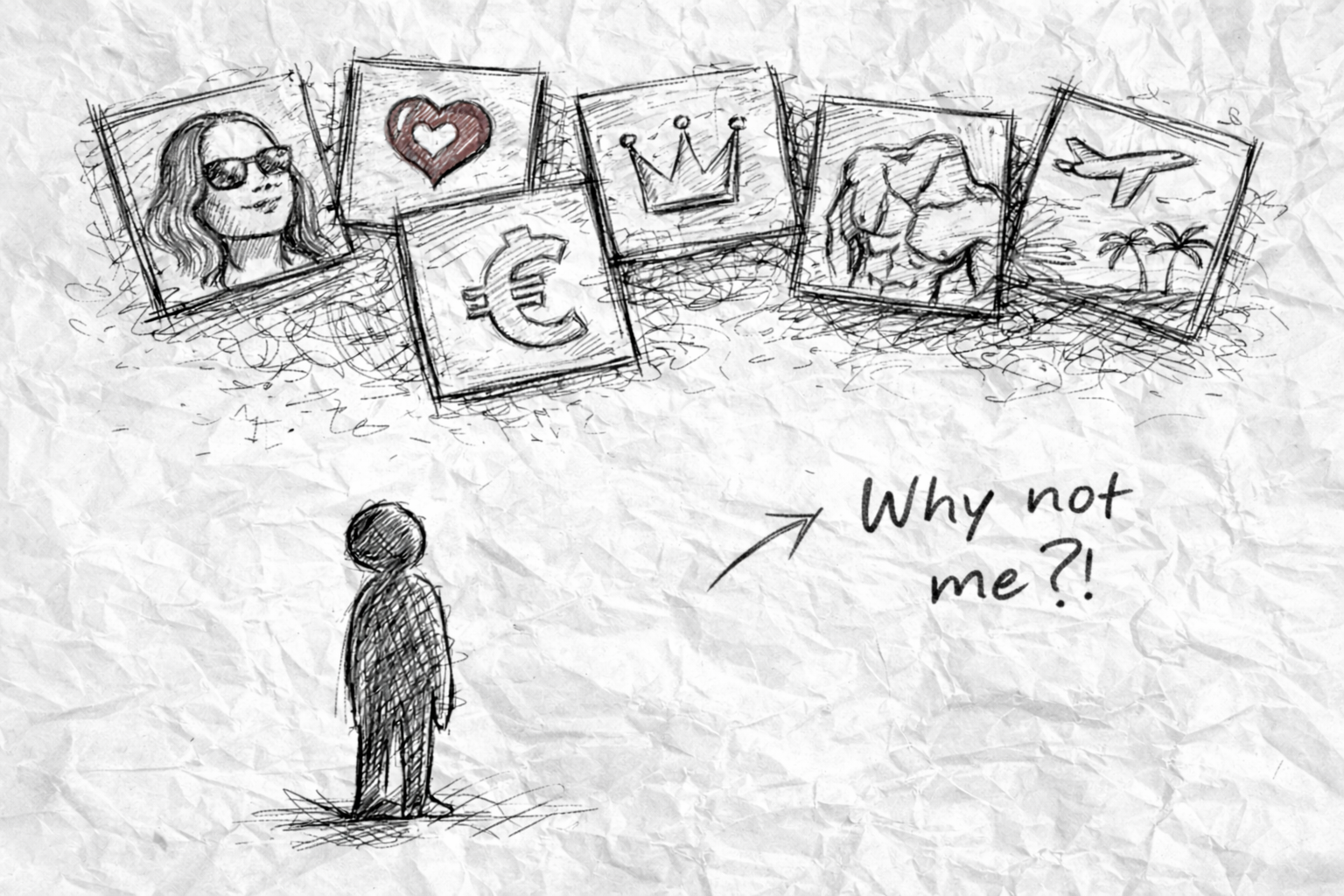
Social media, by contrast, appears clinically clean. It arrives wrapped in the language of connection, inspiration and productivity. Its interfaces glow in friendly colours. Its promises feel modern, even hopeful. Yet beneath this polished surface operates an industry that has turned human attention into the most valuable resource of the digital age. Feeds are designed without natural stopping points. Rewards are timed to remain unpredictable. Comparison dynamics are amplified to deepen emotional engagement.
None of this is accidental. It is a highly calculated business model. Which is why the recent verdicts matter so much. They shift the question from “Why are you spending so much time online?” to
“Why are these systems built in ways that make it so hard to leave?”
The Myth of Discipline — and the Reality of Systems
For years, the dominant narrative has been simple: be more disciplined. Reduce screen time. Try a digital detox. Download an app to manage your apps. All this sounds reasonable. But it also subtly relocates responsibility from the system to the individual. But when products are designed with psychological precision to shape behaviour, repeated failure is not a personal weakness. It is a structural outcome.
This is where the societal impact of current developments becomes explosive. As courts begin to scrutinise the architecture of digital platforms, the balance of power may start to shift. Users are no longer the only ones under scrutiny. The engineers of attention are, too.
Why Legal Signals Can Change More Than Scientific Studies
Research findings can be ignored. But court cases are harder to overlook. They create visibility. They reshape narratives, and they legitimise concerns that were once dismissed. Today, saying that social media may be addictive no longer automatically labels someone a technophobic outsider. It increasingly places them within a growing mainstream conversation. This is how large cultural shifts begin. Not through sudden revolutions, but through slow, irreversible changes in perspective. And, through individual acts of exit.
What We Might Lose — and What We Could Gain
The debate is not only about platforms. It touches a deeper question: How do we actually want to live? With fragmented attention — or sustained focus? With constant comparison — or inner stability? With digital hyper-visibility — or the freedom to be invisible again? Going offline still feels radical today. But in a few years, and that’s my hope, it may simply feel reasonable. Just as not smoking is no longer rebellious, but a form of self-care.
The Big Tech Moment Is Here. The Decision Is Still Ours.
The rulings against Meta, Google and others are not an endpoint. And regulation alone will not solve the problem. But they mark a beginning. A visible crack in the façade of an industry long perceived as indispensable. A reminder that social norms are negotiable — and that our relationship with technology is not fixed. These verdicts are not the final judgment on social media. They are a signal. A signal that public perception is shifting, that the debate is maturing, and that the question of digital self-determination is becoming more urgent than ever.
Big Tech may be approaching its Big Tobacco moment. Yet the decisive move does not lie with courts or lawmakers. It lies with us. Because just as every smoker can ultimately choose to quit, we, too, can choose to leave the feed. And that’ is, Ladies and Gentleman, the most powerful response of all.
Want to leave social media for good? This book explains why it matters — and how to do it. Blending science, insight and practical guidance, it provides a clear and achievable exit plan for reclaiming your focus, wellbeing and real life.
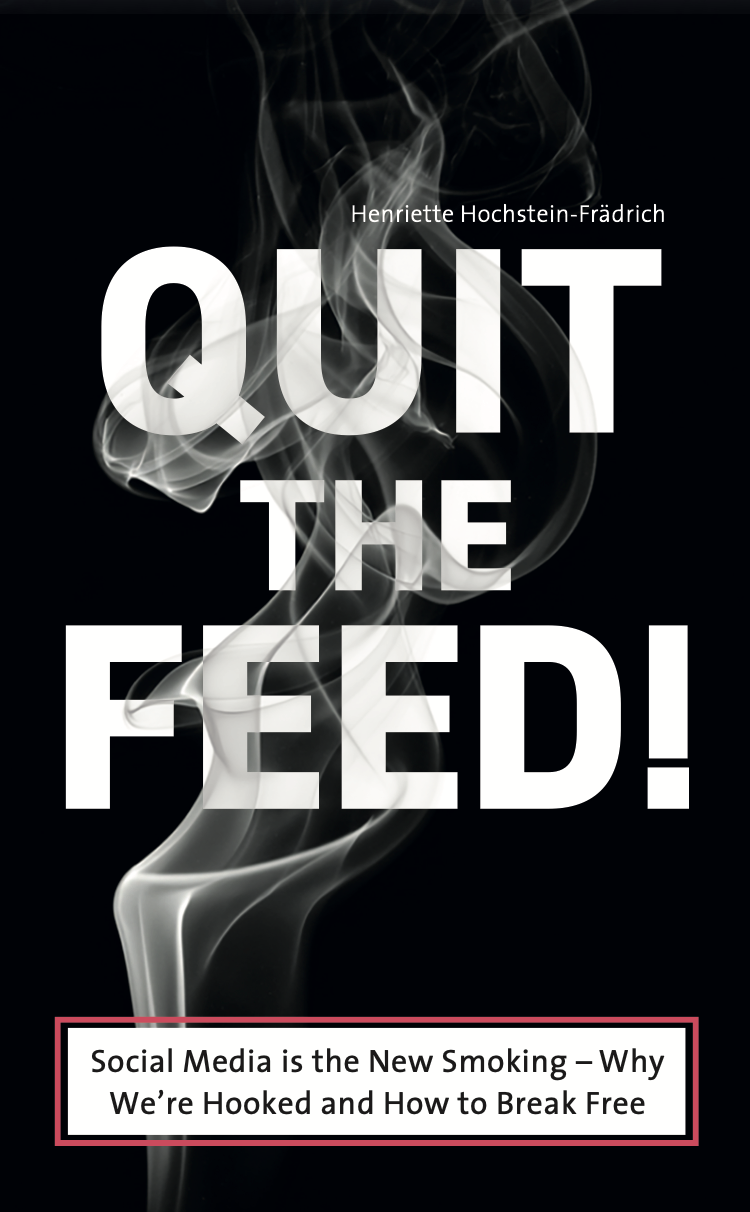
QUIT THE FEED!
Social Media is the New Smoking - Why We´re Hooked and How to Break Free
Deep down, we all already know it. Social media isn’t good for us. It steals our time. It destroys our focus. It traps us in endless comparison loops. It makes us feel anxious, restless, not enough. And yet — we keep reaching for our phones. Just like smokers reach for the next cigarette. Likes work like nicotine: a short dopamine hit — followed by long-term dependency.
This book reveals why social media is so addictive
and how you can successfully break free.
Related Articles & Deep Dives into Social Media Addiction and Digital Freedom


About the Author

Henriette Hochstein-Frädrich is a German author, keynote speaker, and thought leader exploring attention, digital behavior, and radical focus in an age of constant distraction.
Writing from a distinctly European cultural perspective, she examines the psychological, societal, and economic forces shaping our relationship with technology — often challenging dominant Silicon-Valley narratives around productivity, visibility, and digital success.
With a background in journalism and entrepreneurship, Henriette combines analytical depth with a provocative, emotionally intelligent voice that resonates with audiences navigating transformation, overload, and the search for clarity in modern life.
She is the founder of several digital platforms and has worked with organizations and leaders across industries on topics such as resilience, innovation, leadership, and the future of human performance in an increasingly algorithm-driven world.
Her book Quit the Feed — Social Media Is the New Smoking contributes to the growing global conversation about mental health, attention economy, and digital autonomy. Through her writing, talks, and seminars, she invites individuals and organizations to rethink their dependence on social media — and to rediscover focus, freedom, and real connection.