“Do-Nothing Challenge”: When Even Doing Nothing Becomes Content
Silence now needs an audience. “Being with yourself” has become the latest flex in a world that barely exists without visibility. On performative withdrawal — and the truly radical power of disappearing.
Look How Grounded I Am: Why Even Doing Nothing Has to Be Performed
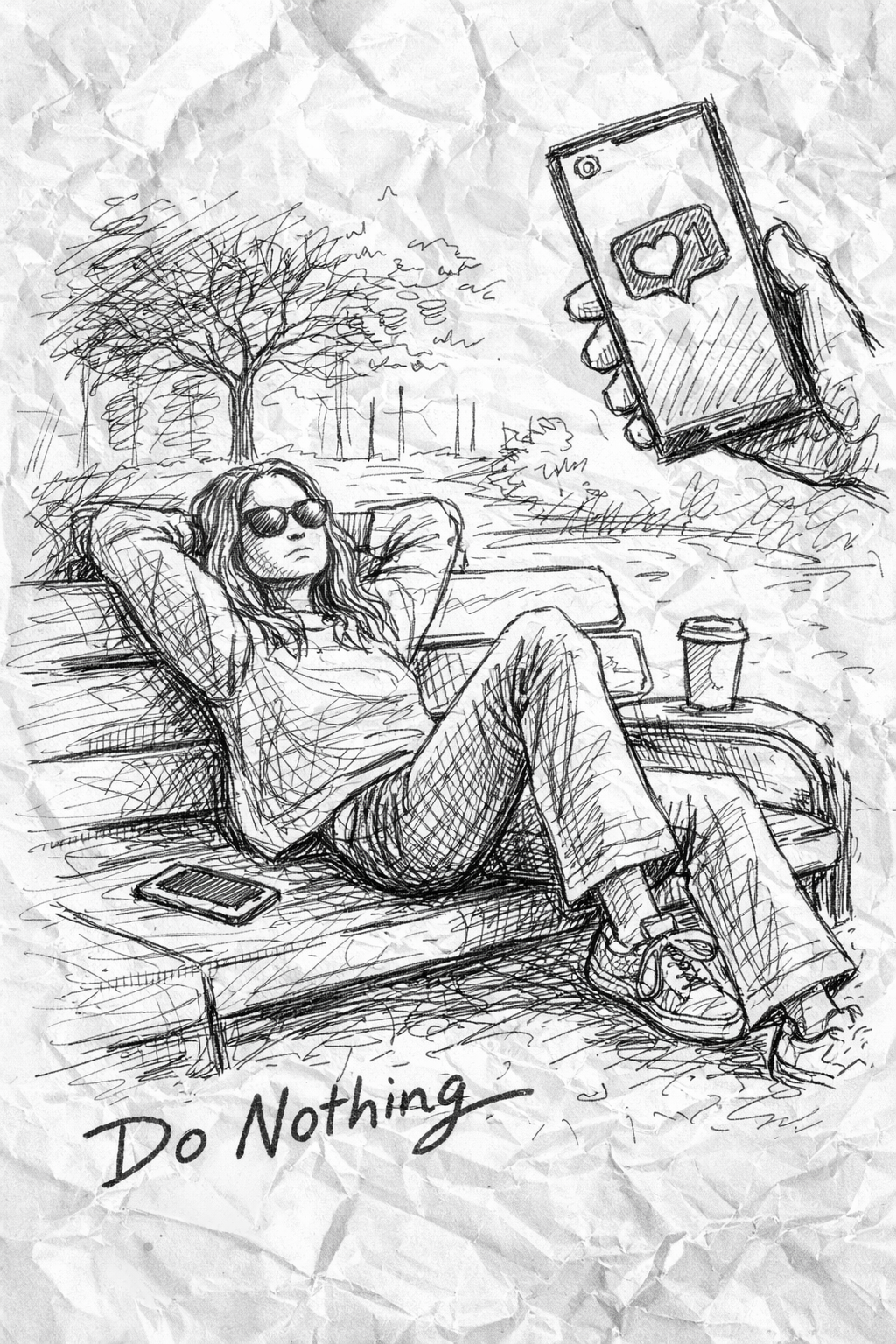
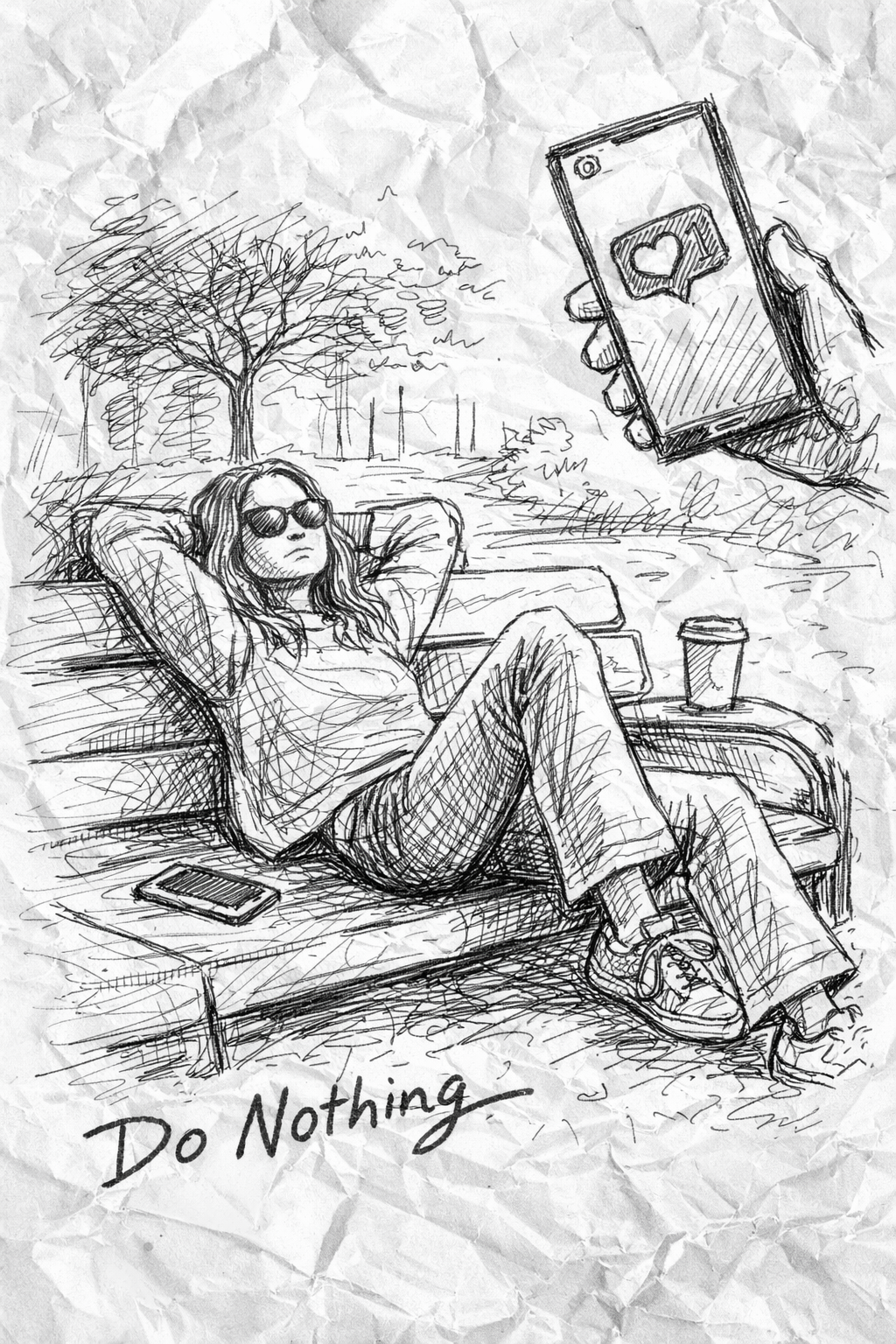
It really is one of the great achievements of our time: we’ve managed to turn even nothingness into a format. Doing nothing, ladies and gentlemen, is now content. Silence is now a statement. Withdrawal is now an aesthetic. Introspection is now a trend. Somewhere, a young person in a beige linen shirt sits by the window of a tram, gazing thoughtfully into the vague distance, silently telling the world: “Look how deeply I’m in touch with myself.” And of course, they post it on Instagram or TikTok. You almost want to congratulate them. Or gag slightly. Possibly both.
The Beautiful Illusion of Resistance
At first glance, there is something deeply understandable — even hopeful — about this trend. In a world that constantly pings, flashes, screams, evaluates, compares, sells and stimulates, doing nothing looks like a quiet act of resistance. A soft no. A small finger slipping out of the fist of the attention economy. No reacting.
No producing. No posting. No consuming. No commenting. No constant availability. It sounds reasonable.
Healthy. Human. Almost revolutionary. Almost.
When Even Resistance Becomes Performance
Because the moment doing nothing emerges as a counter-movement, it gets polished, curated and staged. You don’t just sit — you sit meaningfully. You don’t just go quiet — you go quiet with intention. Silence becomes aesthetic. Stillness becomes identity. And just like that, the system absorbs the resistance, repackages it and places it neatly back on display. Welcome to the next level of absurdity: even opting out is now something to perform.
Capitalism Will Monetise Your Withdrawal, Too
That’s the real genius — and the real perversity — of our time. There is almost no untouched interior left.
Everything gets processed. Every impulse, every longing, every form of exhaustion, every counter-movement. Even the desire to be left alone is instantly turned into a narrative, a trend, a visual language, a cultural product.
You want less? Here’s the aesthetic for it.
You want out? Here’s the curated version of withdrawal.
You want peace? Wonderful — but please make it visible, shareable, interpretable.
We are living in an era where even anti-performance shows up as just another form of performance. And that raises a deeper question: Why do we feel the need to curate even our exhaustion? Why must even doing nothing be visible, legible, meaningful? Why is it no longer enough to simply be?
The Visibility Trap
The answer is uncomfortable: Because we are so deeply embedded in the logic of visibility that we can no longer imagine withdrawal as a private, silent act. Everything becomes a signal, a statement, an identity,
a pose. Doing nothing is no longer just doing nothing. It becomes a style, a symbol, and yes, a flex.
The New Flex: “I Don’t Need Any of This”
Humans have always wanted to signal something about themselves. That’s not new. In the past, it might have been a luxury watch, a car, a holiday. Today, it’s more subtle. We flex with taste, with awareness, with
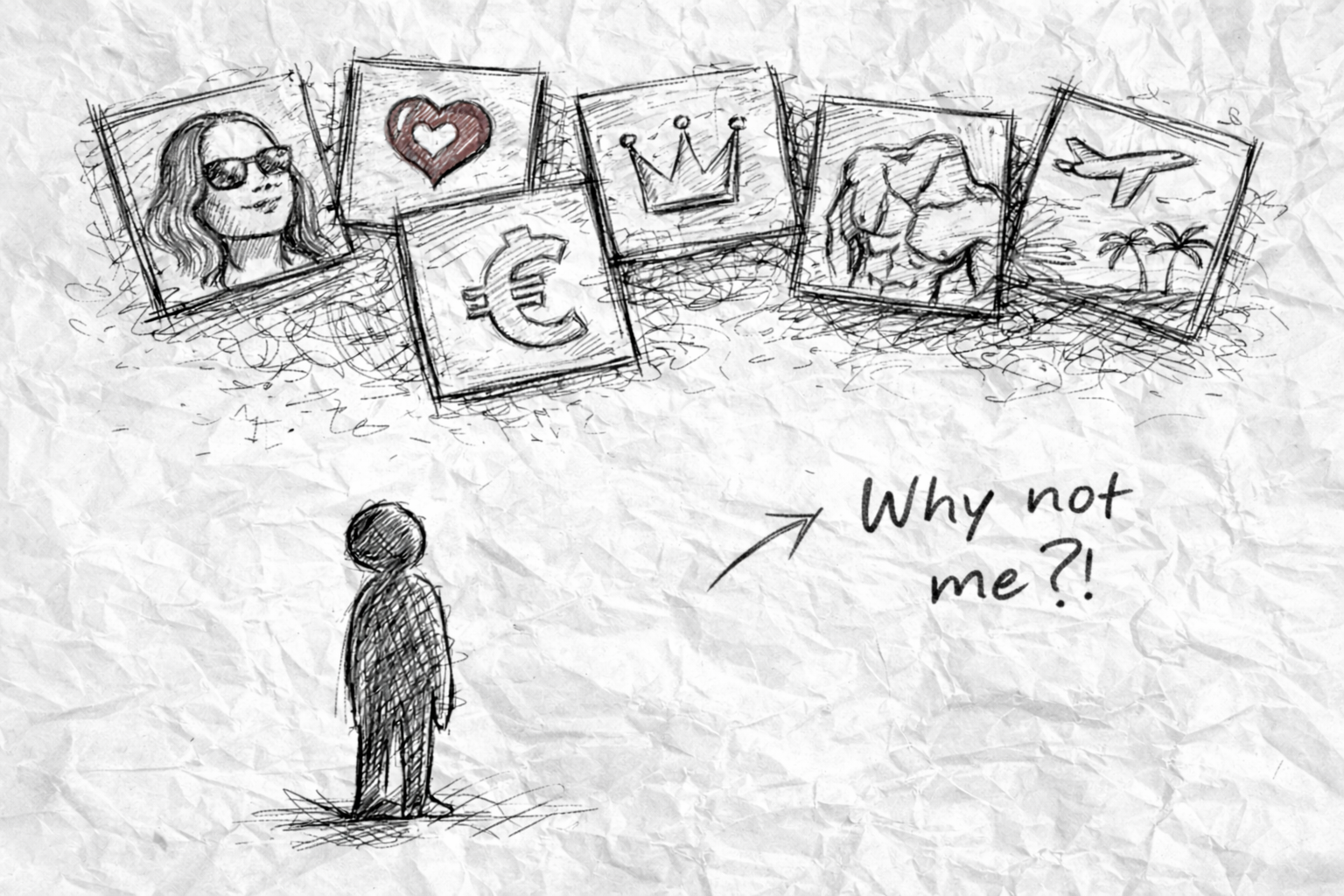
mindfulness, with self-optimization, with sustainability, with our emotional intelligence, with vulnerability. And now: with doing nothing. The new digital flex is no longer just: “Look where I am.” It is: “Look how little I need.”
Which is particularly seductive — because it feels morally superior. But in the end, it’s still the same thing:
a social signal.
I’m doing nothing — please notice.
I’m offline — please acknowledge it.
I’m withdrawing — please respond.
Why Even Doing Nothing Has to Be Staged
Maybe because we can barely tolerate real stillness anymore. Not a cozy Sunday on the couch. But actual nothingness. No distraction. No input. No purpose. No background stimulation. No inner narrator framing the moment. Just being. And that is where it gets uncomfortable. Because real stillness doesn’t immediately lead to peace. It often leads to restlessness. Emptiness. Fatigue. Anxiety. The nagging sense of missing out.
Of not being relevant. Of not being enough.
That is exactly why we keep returning to the feed. To distraction. To stimulation. To the digital substitute for something deeper.
The Performance Protects Us from the Void
Staging stillness becomes a clever compromise. You simulate withdrawal — without fully surrendering to it.
You flirt with silence — without disappearing. You go “offline” — but in a way that is still visible, still shareable, ideally even viral. The pose protects you from the actual encounter with yourself. Because real nothingness is not pretty. It’s not curated. It’s not Pinterest. It’s not “slow living” with candles and linen. It can be raw, uncomfortable and confronting. It asks a difficult question: Who are you when nobody is watching?
The Attention Economy Even Loves Your Resistance
The system is not naive. It is brilliant, fast and adaptive. It absorbs everything: mindfulness, minimalism, authenticity, therapy, digital detox. Everything becomes content. Everything becomes a product. Everything becomes part of the system. Which is why it’s not enough to admire doing nothing. Not enough to find the “do-nothing challenge” charming. We need to ask a more radical question: What if the problem isn’t just that we do too much — but that we are completely entangled in visibility itself?
The Truly Radical Move: Leave the Stage
What if freedom is not about doing less — but about no longer needing to show everything? What if the real shift isn’t a new trend — but stepping off the stage entirely? That’s where it stops being lifestyle. And starts becoming liberation.
Just Go Offline. Completely.
My position has become less romantic, more direct: Not slightly more mindful scrolling. Not prettier slow living. Not more conscious doing nothing. Just: leave. Yeah! Offline. Fully. For real. Not as a moral badge.
Not as nostalgic rejection of technology. But as a clear, intelligent response to a system that has shaped us far more deeply than we admit.
The Real Revolution
The real problem is not just that we spend too much time on our phones. The problem is that the logic of these systems has moved inside us. We no longer simply experience life. We document it. Frame it. Evaluate it. Share it. Seek validation for it. So the real revolution is not sitting still for ten minutes. The real revolution is: not posting it. Not turning it into identity. Not narrating your own presence. Just being there. Without telling anyone.
The Most Radical Form of Doing Nothing Is Invisible
What if the most meaningful moments are the ones nobody sees? What if real presence begins where it is no longer performed? What if we only truly reconnect with ourselves when we stop constantly showing ourselves?
The Most Subversive Thing You Can Do Is Unremarkable
It doesn’t look like a trend. It looks like: leaving your phone at home. Taking a walk without a podcast.
Having dinner without taking a photo. Staring out of a train window without turning it into content. A day that needs no witnesses. A life that doesn’t need to be broadcast to feel real. That is far less spectacular than any challenge. And exactly why it is far more radical.
Offline Is the New Radical
Not digital detox weekends, not “conscious scrolling”, not reduced screen time while staying deeply entangled. But an honest question: What do I gain if I really leave? Not for a weekend. Not as a trend.
But for good.
The Greatest Luxury of Our Time
The greatest luxury today is not reach, not relevance and not visibility. It is this: A life nobody comments on.
An afternoon that belongs to no algorithm. A thought that is never posted. A feeling that doesn’t need a caption. A self that doesn’t need to be displayed to feel real. “Look how present I am”? No, thank you.
How about: I am simply present. And nobody needs to know.
Tired of performing even your “offline time”? This book shows you why stepping away from social media is the only real way out — and how to do it. Blending science, sharp insight and practical guidance, it offers a clear path back to focus, presence and a life that doesn’t need to be performed.
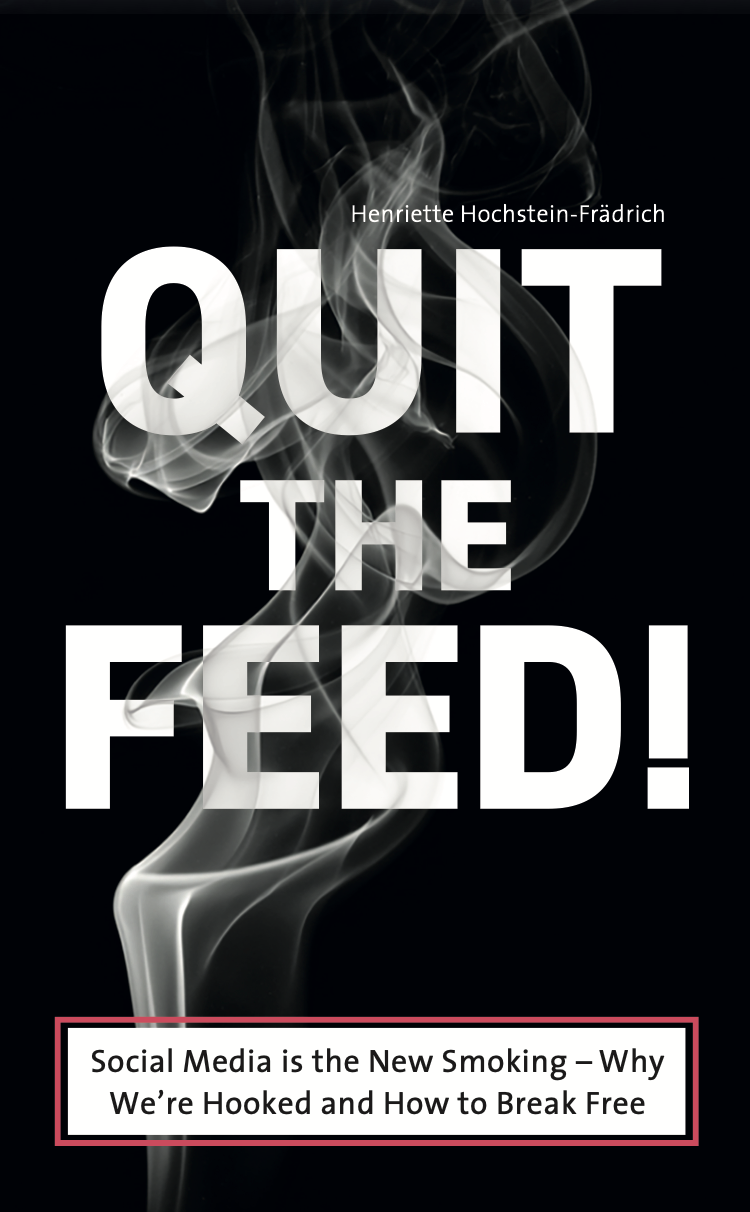
QUIT THE FEED!
Social Media is the New Smoking - Why We´re Hooked and How to Break Free
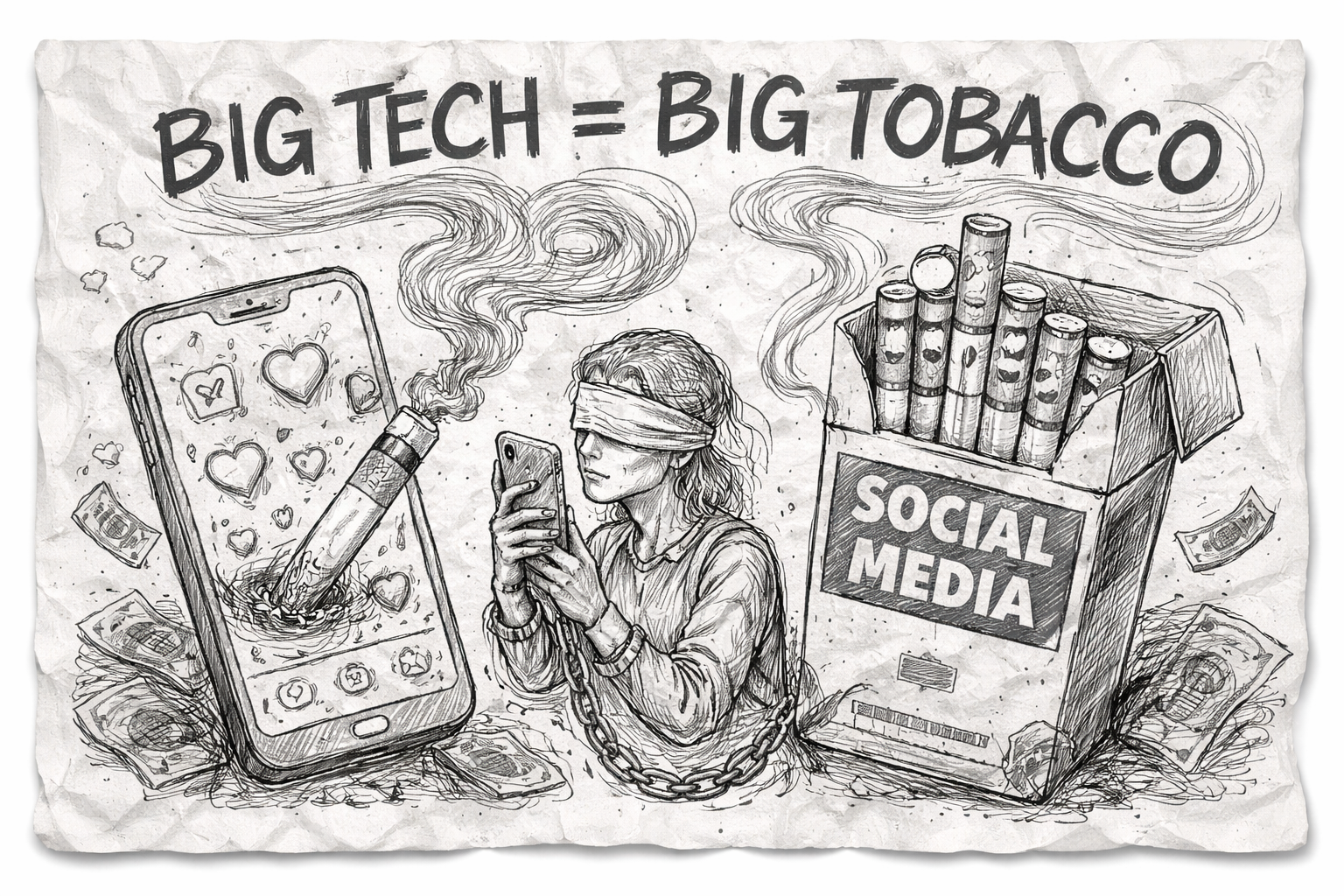
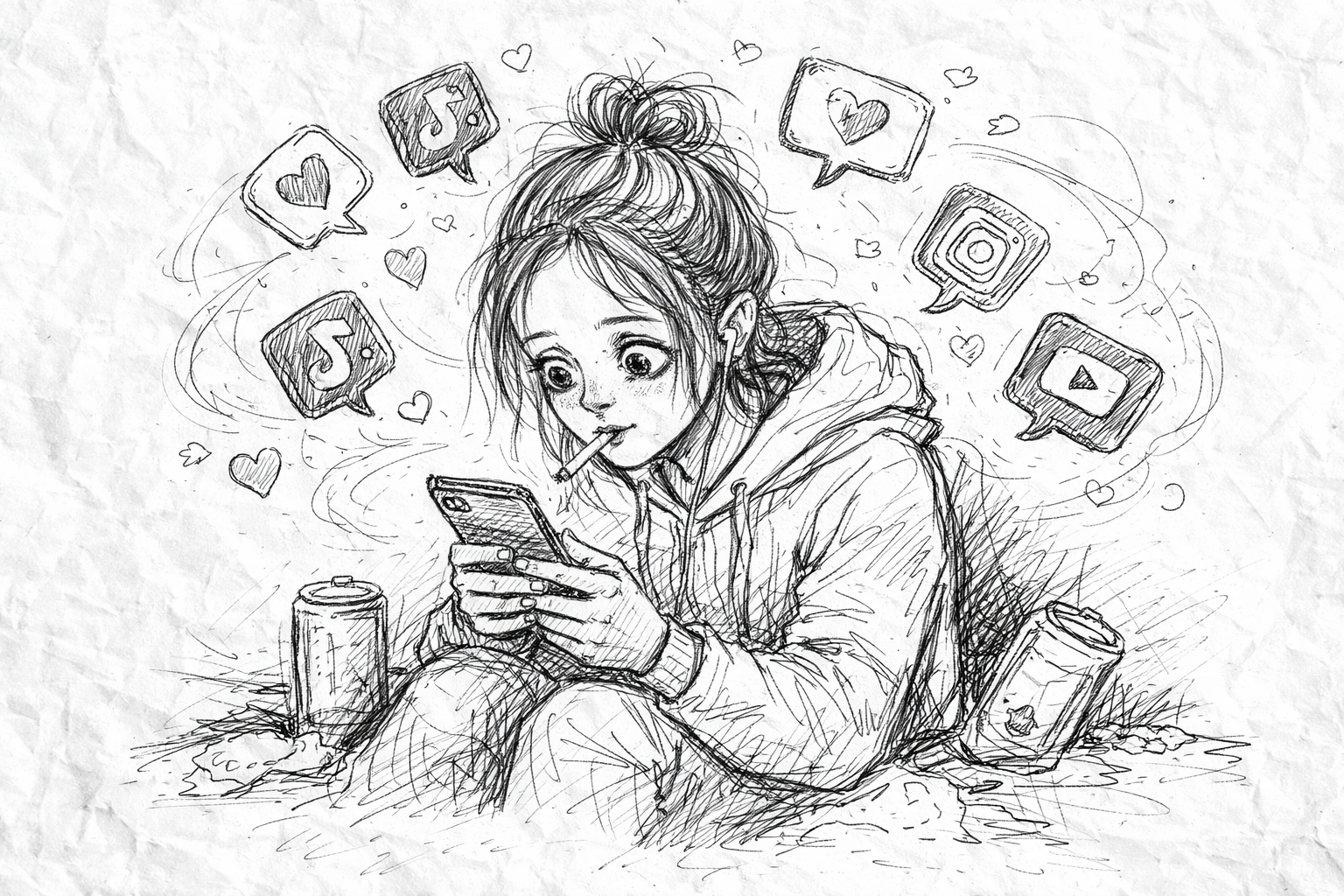
Deep down, we all already know it. Social media isn’t good for us. It steals our time. It destroys our focus. It traps us in endless comparison loops. It makes us feel anxious, restless, not enough. And yet — we keep reaching for our phones. Just like smokers reach for the next cigarette. Likes work like nicotine: a short dopamine hit — followed by long-term dependency.
This book reveals why social media is so addictive
and how you can successfully break free.
Related Articles & Deep Dives into Social Media Addiction and Digital Freedom
About the Author
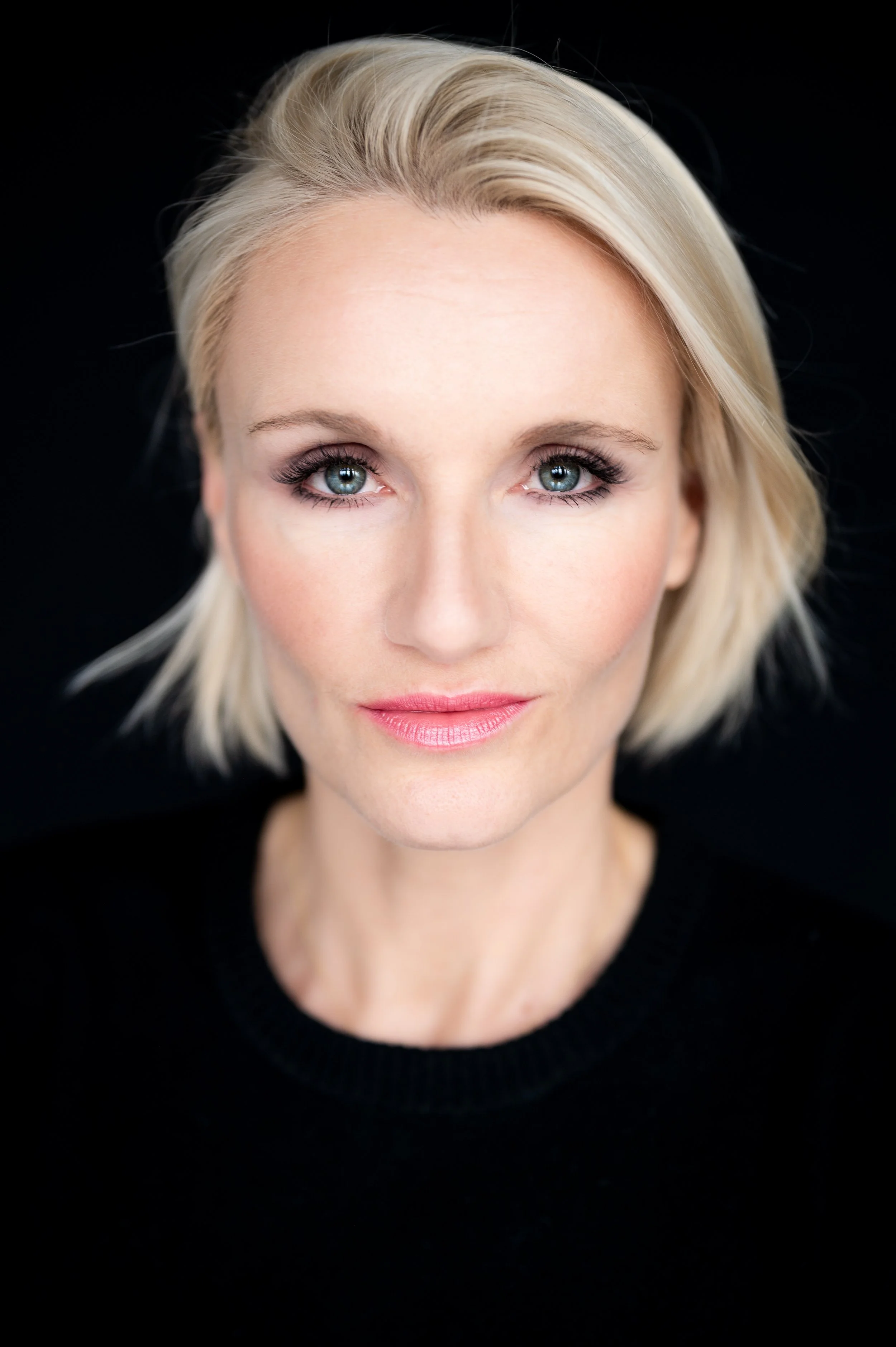
Henriette Hochstein-Frädrich is a German author, keynote speaker, and thought leader exploring attention, digital behavior, and radical focus in an age of constant distraction.
Writing from a distinctly European cultural perspective, she examines the psychological, societal, and economic forces shaping our relationship with technology — often challenging dominant Silicon-Valley narratives around productivity, visibility, and digital success.
With a background in journalism and entrepreneurship, Henriette combines analytical depth with a provocative, emotionally intelligent voice that resonates with audiences navigating transformation, overload, and the search for clarity in modern life.
She is the founder of several digital platforms and has worked with organizations and leaders across industries on topics such as resilience, innovation, leadership, and the future of human performance in an increasingly algorithm-driven world.
Her book Quit the Feed — Social Media Is the New Smoking contributes to the growing global conversation about mental health, attention economy, and digital autonomy. Through her writing, talks, and seminars, she invites individuals and organizations to rethink their dependence on social media — and to rediscover focus, freedom, and real connection.