(Social) Media Addiction in Children: We’re Building a Drug and Calling It Progress
We would never say, “Oh, just let the kids smoke — everyone’s doing it.”
Yet today we hand them smartphones and call it progress. A new study on media addiction is raising uncomfortable questions. Social media is addictive — and not just for children. Why it’s time to rethink attention, responsibility and what real progress actually means.
When a Study Feels Like a Turning Point
There are studies you read and think: Interesting. And then there are studies you read and instinctively feel:
Something fundamental is shifting. The latest research by the German health insurer DAK on media addiction among children and teenagers clearly belongs to the second category. More and more young people are showing addiction-like patterns of use across social media, gaming and streaming. Sleep disturbances, concentration problems, emotional instability, social withdrawal and chronic overwhelm are among the reported consequences. Predictably, headlines follow. Alarming statistics. Concerned experts. Anxious parents. But somewhere beneath the noise lies a harder truth: this is no longer a marginal issue. It is a societal tipping point.
None of this surprises me. Not because I am smarter than psychologists or researchers. But because the trajectory has been visible for years — to anyone still capable of truly paying attention. And that, perhaps, is exactly what is eroding.
“Let the Kids Smoke a Little.”
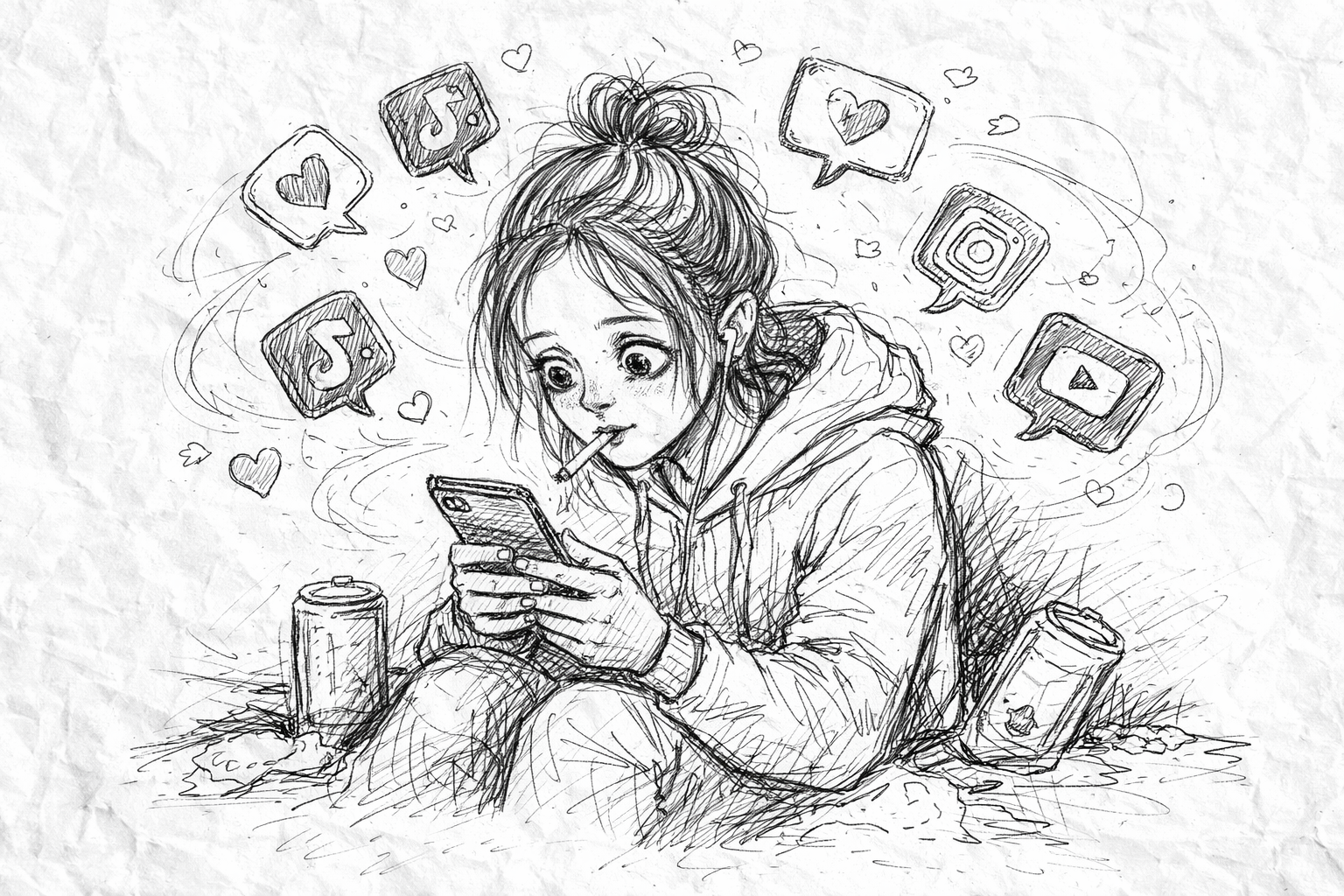
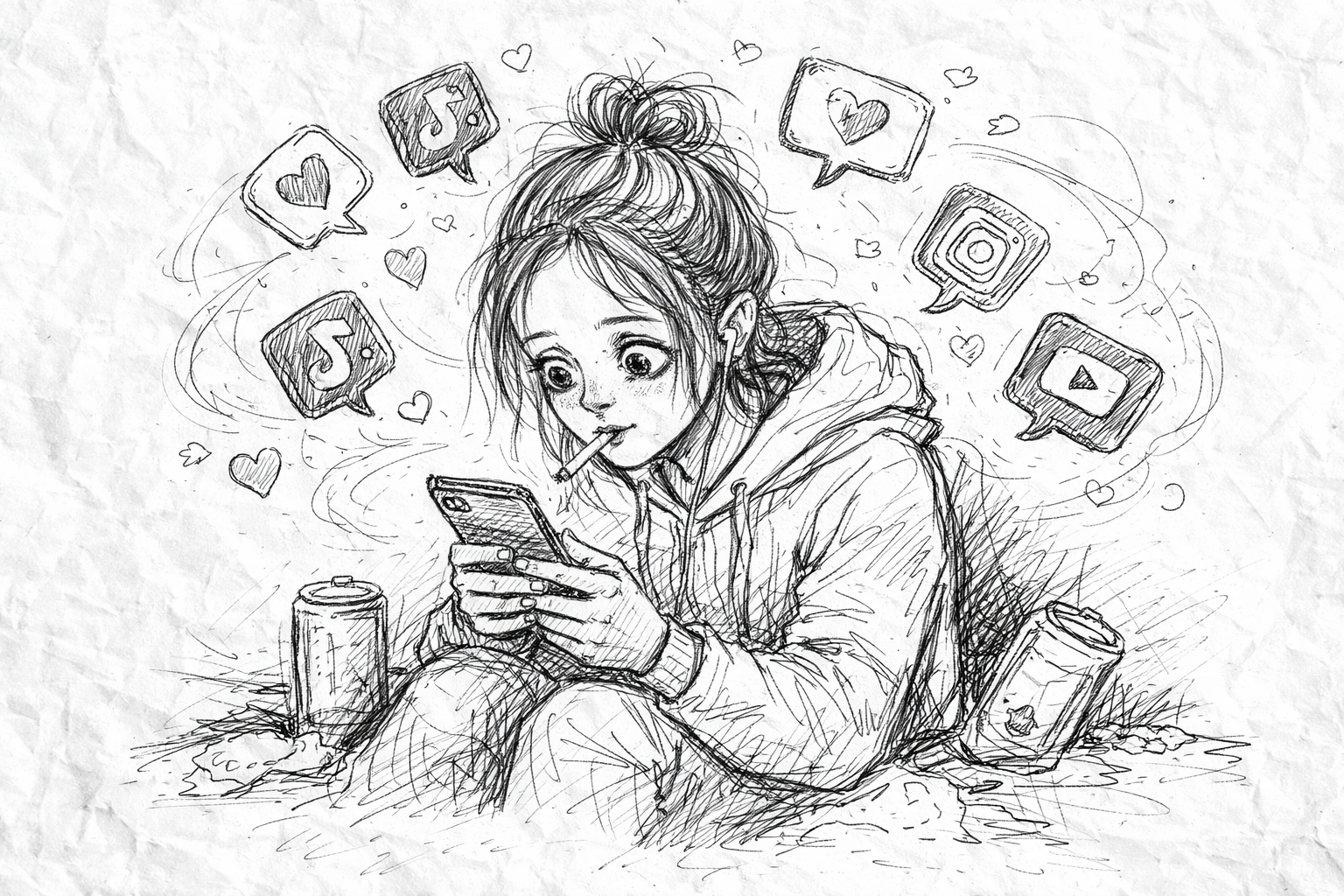
Imagine this scene for a moment: a ten-year-old child sitting on a playground, cigarette in hand. Parents standing nearby saying, “Well, that’s just how things are now. Everyone does it. At least he’ll learn how to handle it responsibly.” Unthinkable? Of course. And yet, in a neurological sense, we are doing something strikingly similar. We know what nicotine does to the brain. We understand how addiction develops. We know early exposure dramatically increases the risk of lifelong dependency.
Still, we place devices into children’s hands that operate on comparable neurobiological mechanisms.
Devices that train dopamine loops, weaken impulse control, rewire reward systems, fragment attention and outsource self-worth to external validation.
We simply don’t call it a drug. We call it digitalisation. Innovation. Connectivity. Media literacy. Sometimes I wonder whether future generations will look back at this era the way we now look at vintage cigarette ads featuring smiling doctors — with disbelief and a quiet sense of collective embarrassment.
A Generation Growing Up Inside the Attention Economy
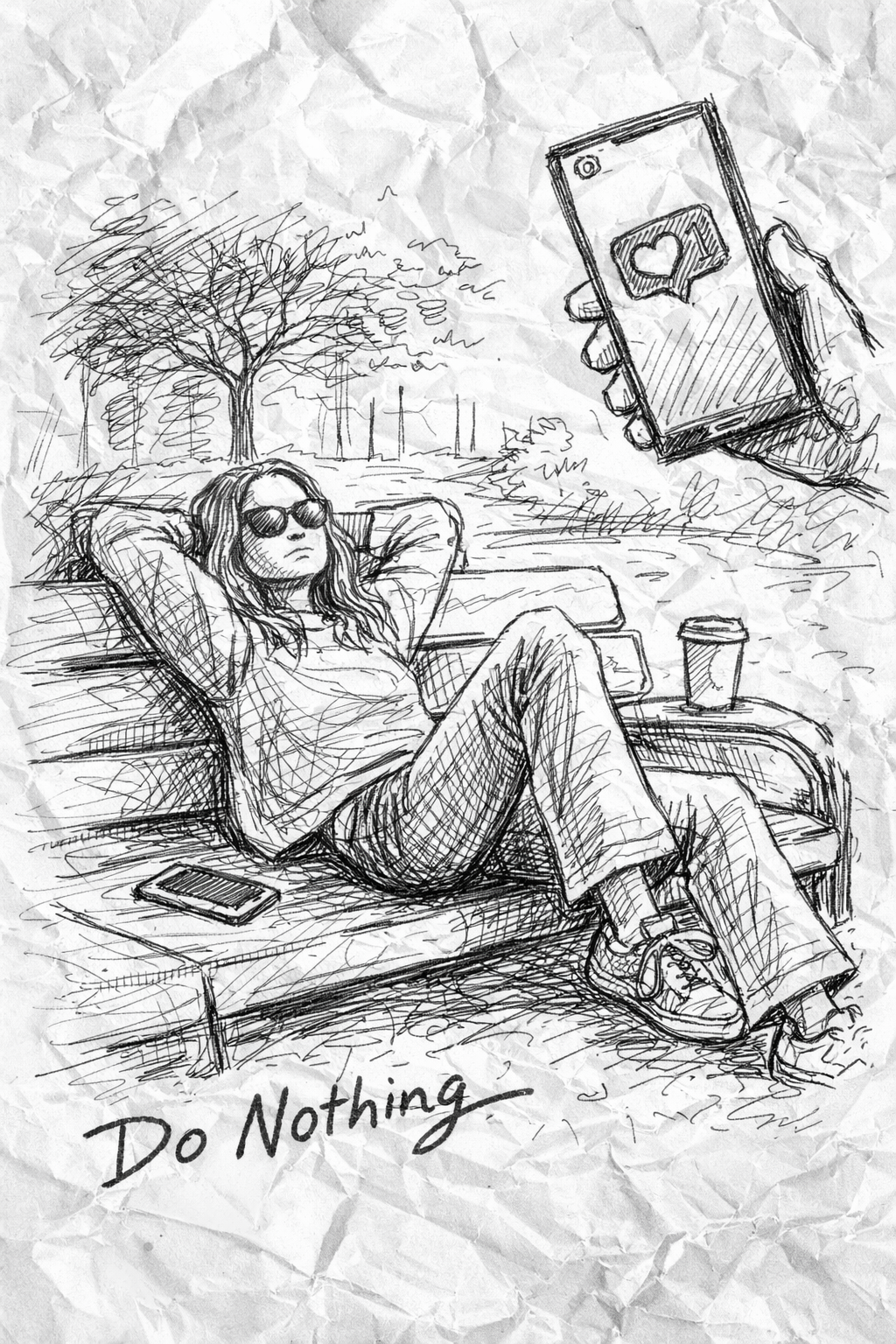
What is happening right now is historically unprecedented. For the first time, an entire generation is growing up with neural development shaped from early childhood by an artificial economy of attention. Children are no longer primarily learning how to tolerate boredom, resolve conflict, endure silence or regulate their own emotions. They are learning a different sequence first: stimulus — reaction — feedback — next stimulus. Even doing nothing becomes content to be posted and performed. Brains are increasingly trained not through lived experience in the physical world, but through algorithmically optimised chains of stimulation. This may sound technical. In reality, it is deeply existential. Because identity grows out of experience, experience requires presence, and presence requires attention. And when attention becomes a commodity, identity risks becoming a by-product of someone else’s business model.
Social Media Is Not a Neutral Tool
We urgently need to stop framing social media as neutral technology. It is not simply a digital telephone, a modern letter or an efficient marketplace. It is an extraordinarily precise system of behavioural modulation. Every swipe trains impatience. Every like conditions dependence on external approval. Every endless feed reinforces the idea that something more exciting is always just one scroll away. The outcome is not merely distraction. It is a structurally altered sense of self. When children internalise these mechanisms early, the consequences reach far beyond daily routines. They shape future capability. Because the future requires focus, depth, frustration tolerance, self-efficacy and inner calm. Qualities that rarely emerge in a constant dopamine downpour.
A Hyperconnected Generation That Feels Increasingly Lost
The DAK study describes symptoms. Indirectly, it also outlines a new lived reality. A generation that is simultaneously overstimulated, emotionally overwhelmed, socially networked and internally disoriented.
A generation with more points of contact than ever before — yet reporting higher levels of loneliness.
A generation communicating constantly, but speaking meaningfully less often. A generation with access to the entire knowledge of the world — yet struggling to sustain a single independent line of thought. This is not individual failure. It is cultural transformation.
The First Parents Passing On an Addiction They Cannot Control
Many adults respond to such findings with a mix of concern and self-reassurance. We just need better regulation. More digital education. Stricter screen-time limits. These reactions are understandable. But they barely scratch the surface. They assume that we ourselves still control the system. In reality, we are the first generation of parents passing on an addictive environment we do not fully understand — let alone master. This is not an accusation, it is a diagnosis. And every diagnosis contains the seed of possibility.
The Radical Question We Avoid
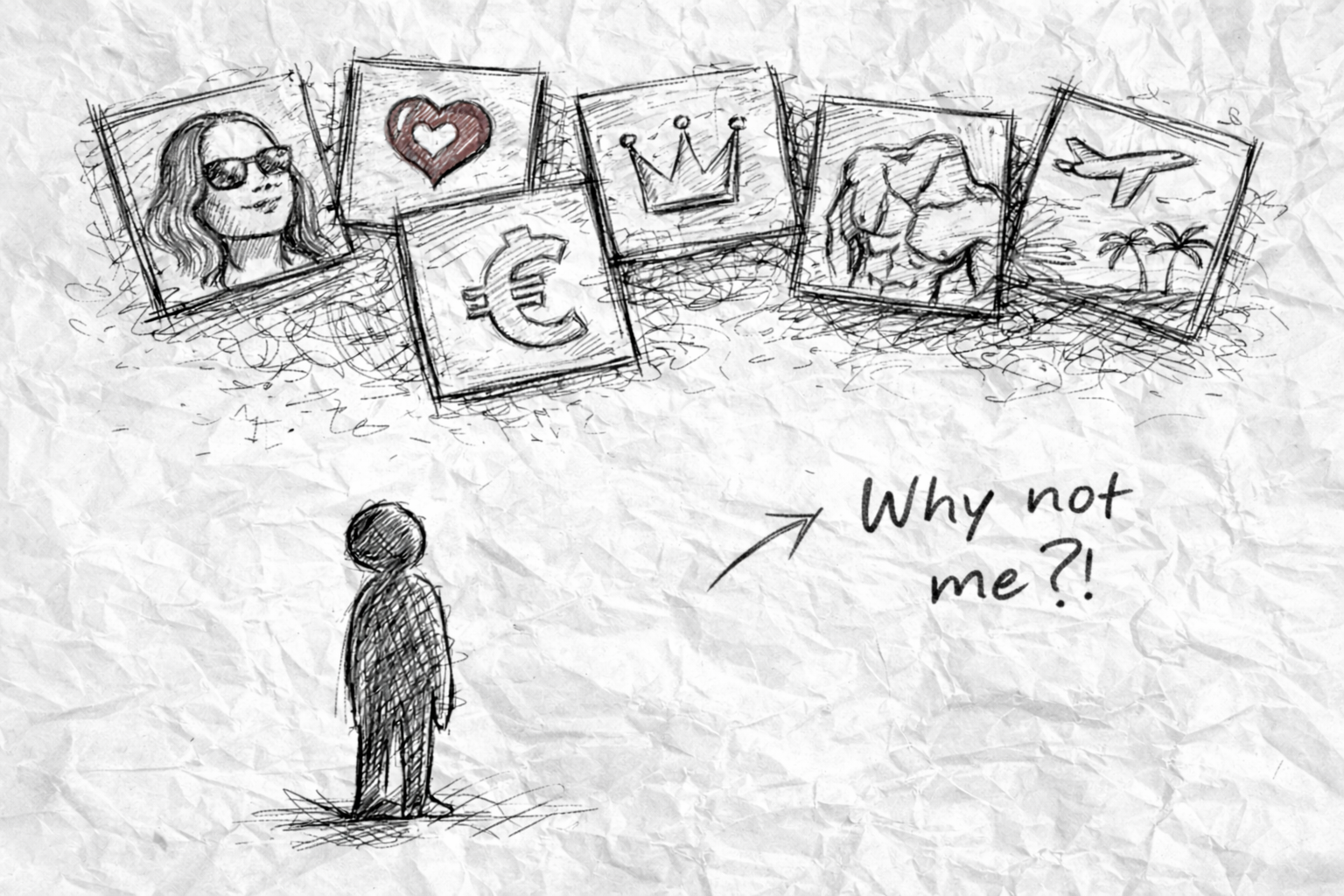
The real question is not: How many hours of screen time are acceptable? The real question is: Why do we accept a system that extracts attention like crude oil? Why is it considered normal that children are drawn into global comparison dynamics before they even reach adolescence? Why do we call it freedom when an entire generation lives according to the rhythm of push notifications? And why is it so difficult for us to imagine that a good life might exist beyond the permanent presence of the feed?
Going Offline as a Symbol of Inner Sovereignty
There is an alternative. Not as moral preaching or nostalgic technophobia, but as a conscious decision for mental autonomy. More and more people are sensing that true progress may lie in regaining the power to choose: when we are reachable, where we direct our attention, how we cultivate relationships, what kind of example we set for our children.
In the future, being offline may not signal regression – it may signal inner freedom. One day we might proudly say: I chose not to be permanently available. I chose to give my brain space to breathe. I chose real presence over digital visibility.
Our children may thank us for that. Perhaps not immediately. But eventually — when they discover that real life holds a depth no algorithm can replicate.
Leaving Social Media May Be the Quietest Global Rebellion
What if this study is not merely a warning, but a mirror? Not only for teenagers — but for all of us. Because before we can protect the next generation, we must understand the system shaping our own behaviour. Real change begins there. Not in bans or quick fixes, but in the willingness to question — and sometimes radically change — our own habits.
The greatest revolution of the coming years may not be the invention of smarter technologies. It may be the simple, powerful act of choosing to step away.
Want to leave social media for good? This book explains why it matters — and how to do it. Blending science, insight and practical guidance, it provides a clear and achievable exit plan for reclaiming your focus, wellbeing and real life.
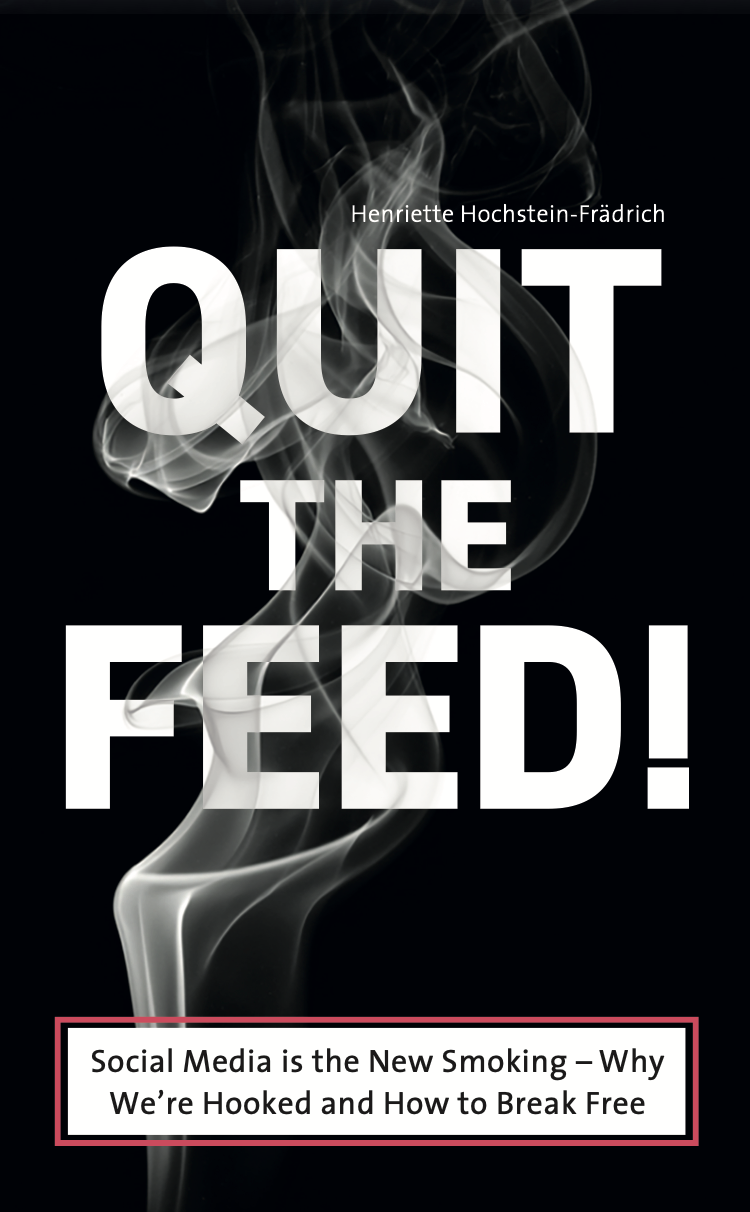
QUIT THE FEED!
Social Media is the New Smoking - Why We´re Hooked and How to Break Free
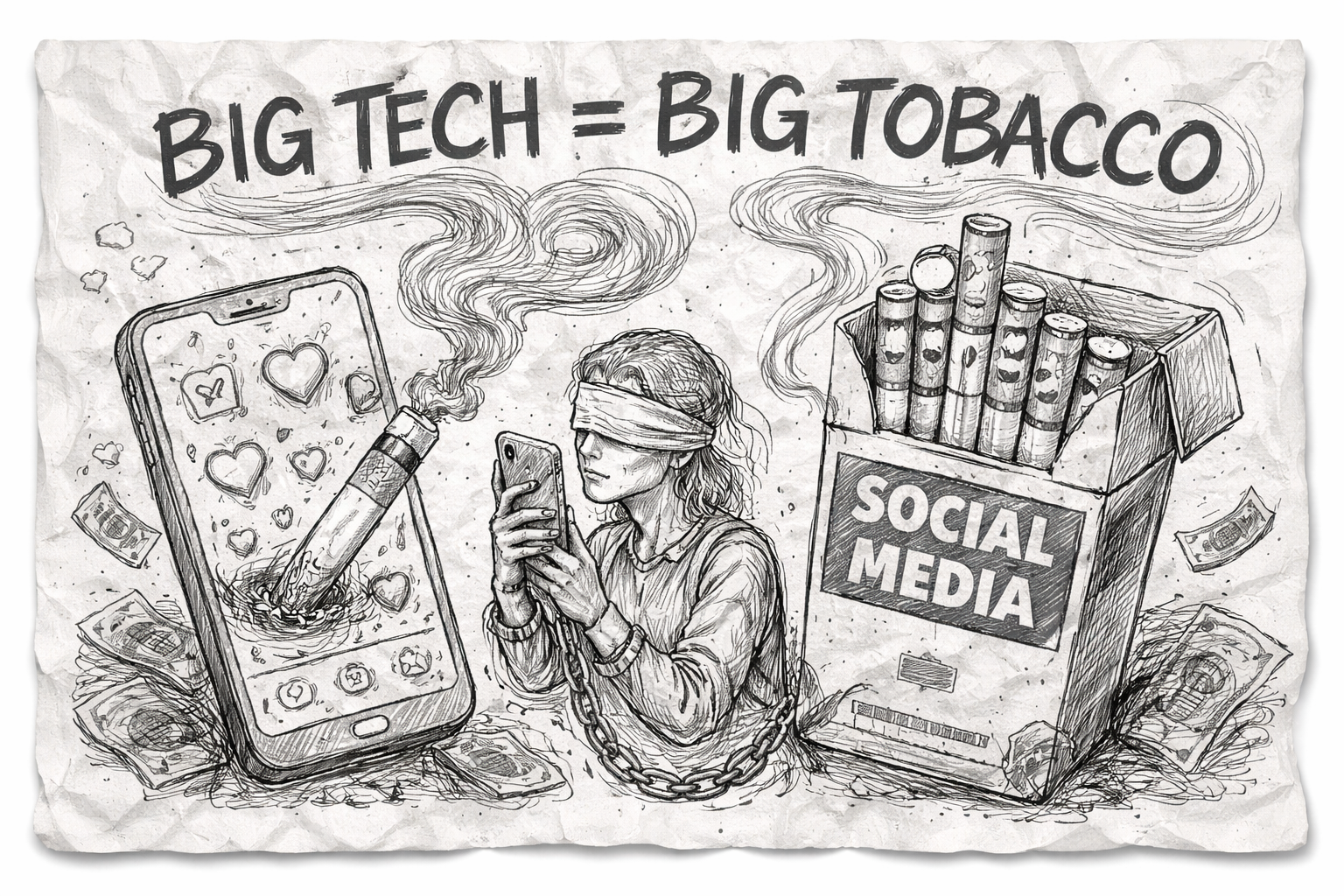
Deep down, we all already know it. Social media isn’t good for us. It steals our time. It destroys our focus. It traps us in endless comparison loops. It makes us feel anxious, restless, not enough. And yet — we keep reaching for our phones. Just like smokers reach for the next cigarette. Likes work like nicotine: a short dopamine hit — followed by long-term dependency.
This book reveals why social media is so addictive
and how you can successfully break free.
Related Articles & Deep Dives into Social Media Addiction and Digital Freedom
About the Author

Henriette Hochstein-Frädrich is a German author, keynote speaker, and thought leader exploring attention, digital behavior, and radical focus in an age of constant distraction.
Writing from a distinctly European cultural perspective, she examines the psychological, societal, and economic forces shaping our relationship with technology — often challenging dominant Silicon-Valley narratives around productivity, visibility, and digital success.
With a background in journalism and entrepreneurship, Henriette combines analytical depth with a provocative, emotionally intelligent voice that resonates with audiences navigating transformation, overload, and the search for clarity in modern life.
She is the founder of several digital platforms and has worked with organizations and leaders across industries on topics such as resilience, innovation, leadership, and the future of human performance in an increasingly algorithm-driven world.
Her book Quit the Feed — Social Media Is the New Smoking contributes to the growing global conversation about mental health, attention economy, and digital autonomy. Through her writing, talks, and seminars, she invites individuals and organizations to rethink their dependence on social media — and to rediscover focus, freedom, and real connection.